
Vedic Astrology (Jyotish Shastra)
The Ancient Science of Light and Cosmic Harmony
Vedic Astrology, or Jyotish Shastra, is the ancient Indian system of celestial interpretation — a bridge between the cosmic and the human. Derived from the Vedanga Jyotisha, it studies planetary movements and their influence on life, destiny, and consciousness.
📘 Origins and Philosophy
Jyotish is one of the six limbs of the Vedas and literally means “science of light.” It connects the macrocosm (universe) with the microcosm (human life), revealing the karmic patterns encoded at birth. Vedic astrology is not just predictive—it is a spiritual discipline for understanding one’s purpose and evolution.
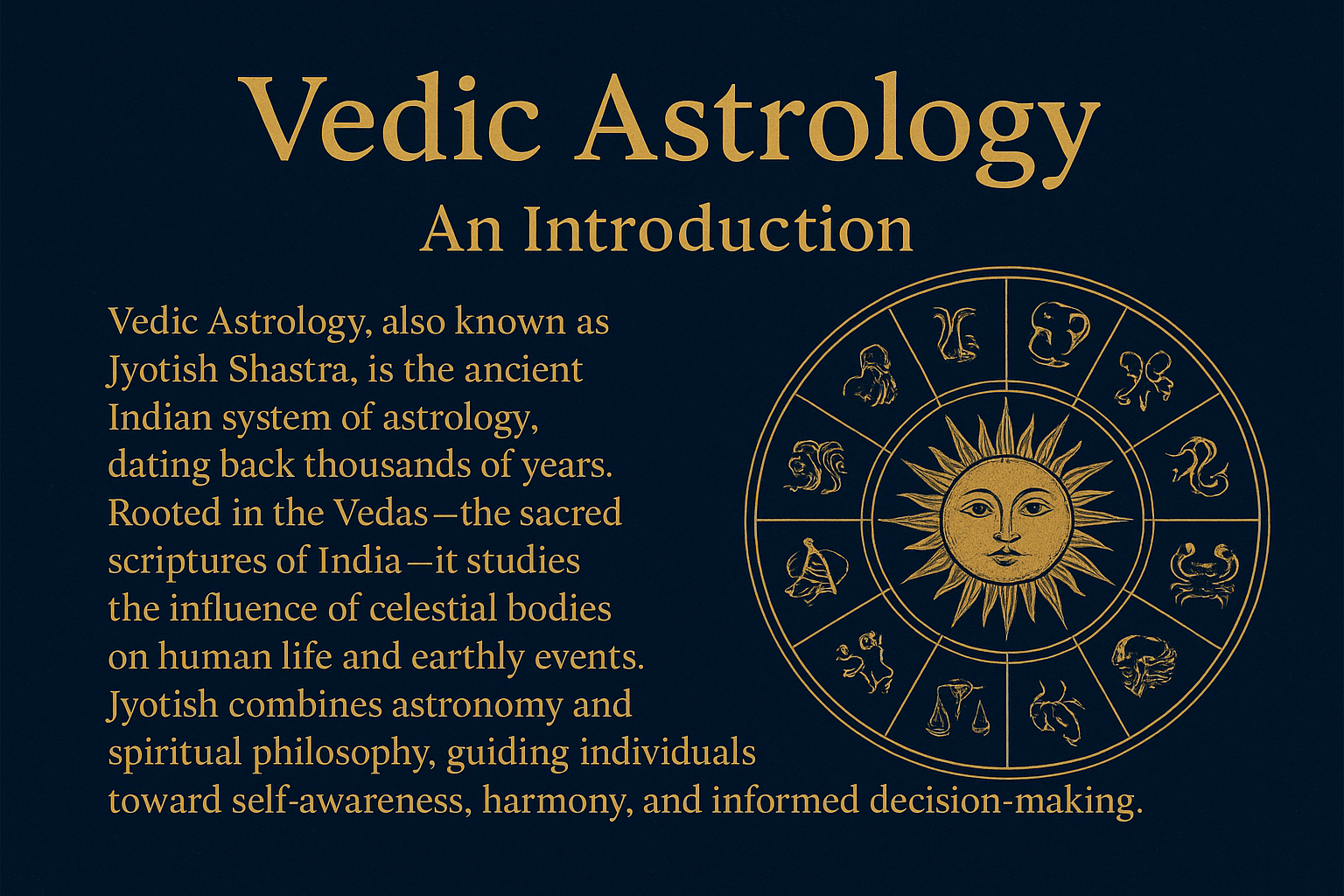
Zodiac Wheel representing the 12 Rashis in Vedic Astrology
🌗 Key Elements of Jyotish
- Rashis (Zodiac Signs): Twelve constellations representing distinct archetypes and temperaments.
- Grahas (Planets): The nine cosmic influencers – Sun, Moon, Mars, Mercury, Jupiter, Venus, Saturn, Rahu, and Ketu.
- Bhavas (Houses): Twelve life domains such as health, wealth, relationships, and spirituality.
- Nakshatras (Lunar Mansions): 27 sectors of the Moon that refine karmic detail and emotional depth.
- Dashas (Planetary Periods): Planetary cycles that reveal when certain life themes unfold.
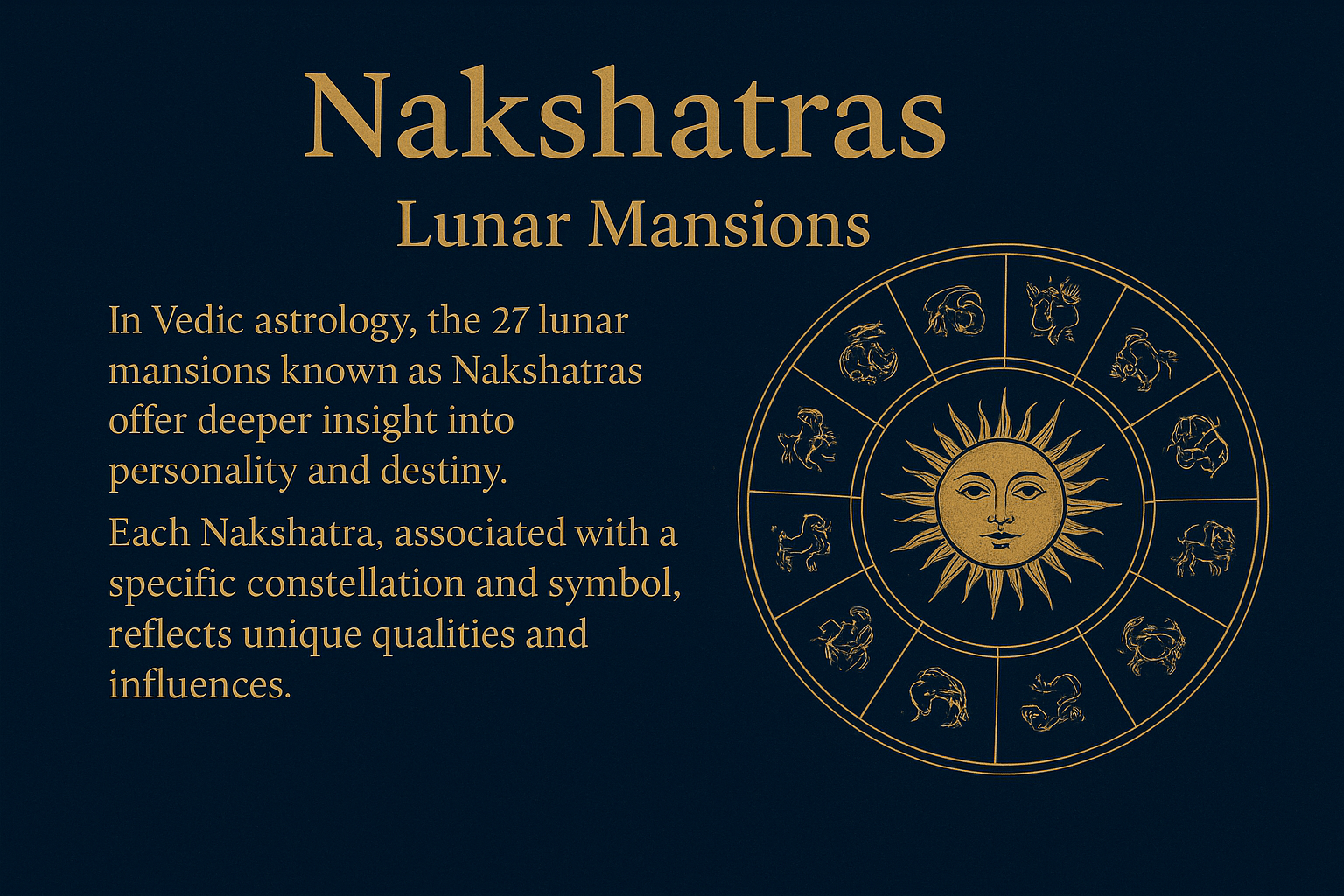
27 Nakshatras: The Moon’s journey through the zodiac
☀️ Planetary Influence
Each planet embodies a unique energy and purpose—guiding life lessons, challenges, and opportunities. The chart of planetary influences illustrates how these cosmic forces interact through the twelve houses of existence.
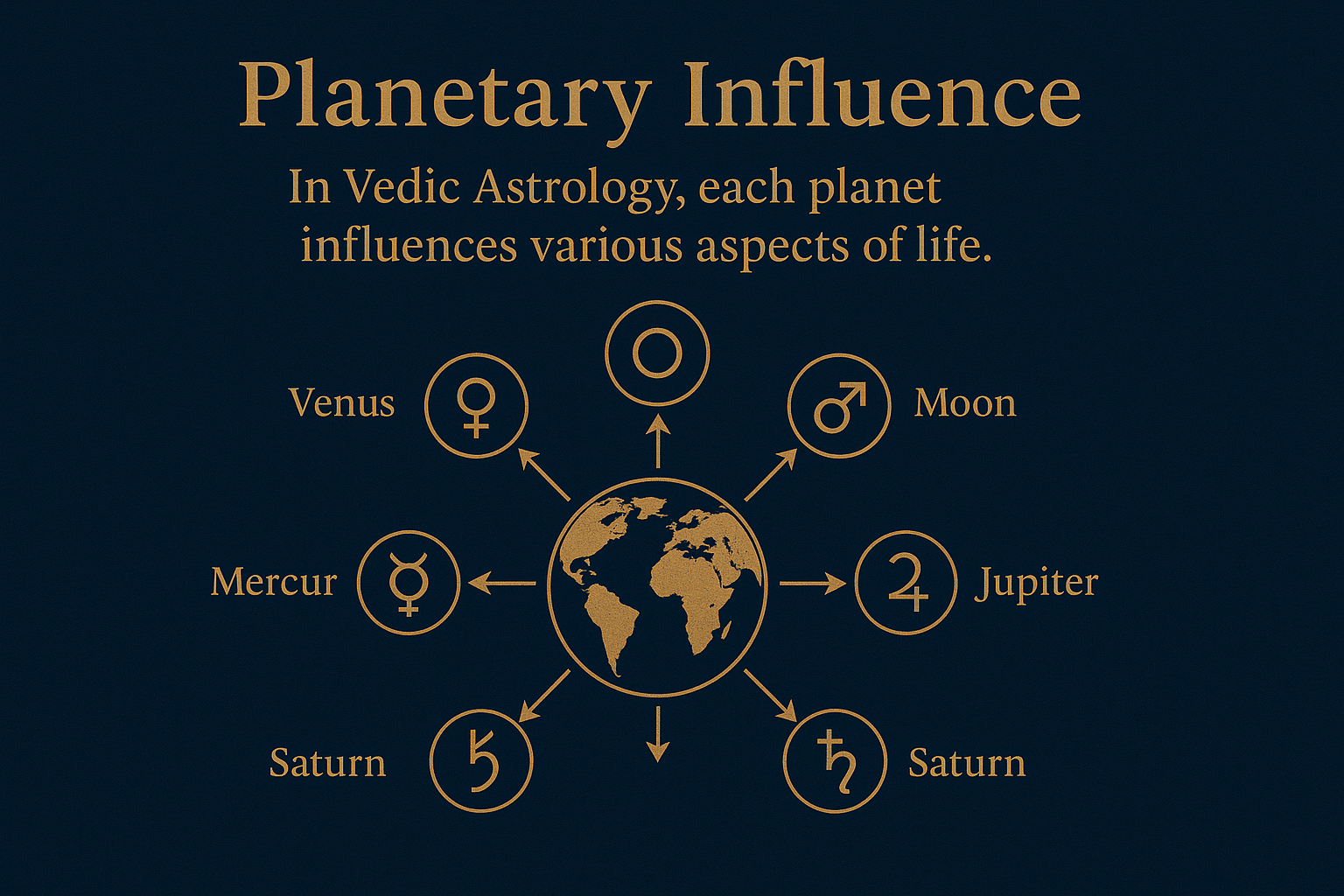
The nine Grahas influencing the twelve houses of life
📜 The Ancient Wisdom
Early astrologers preserved this divine knowledge in palm-leaf manuscripts written in Sanskrit. These texts detail astronomical calculations, planetary significations, and methods for timing events — forming the backbone of modern Jyotish studies.
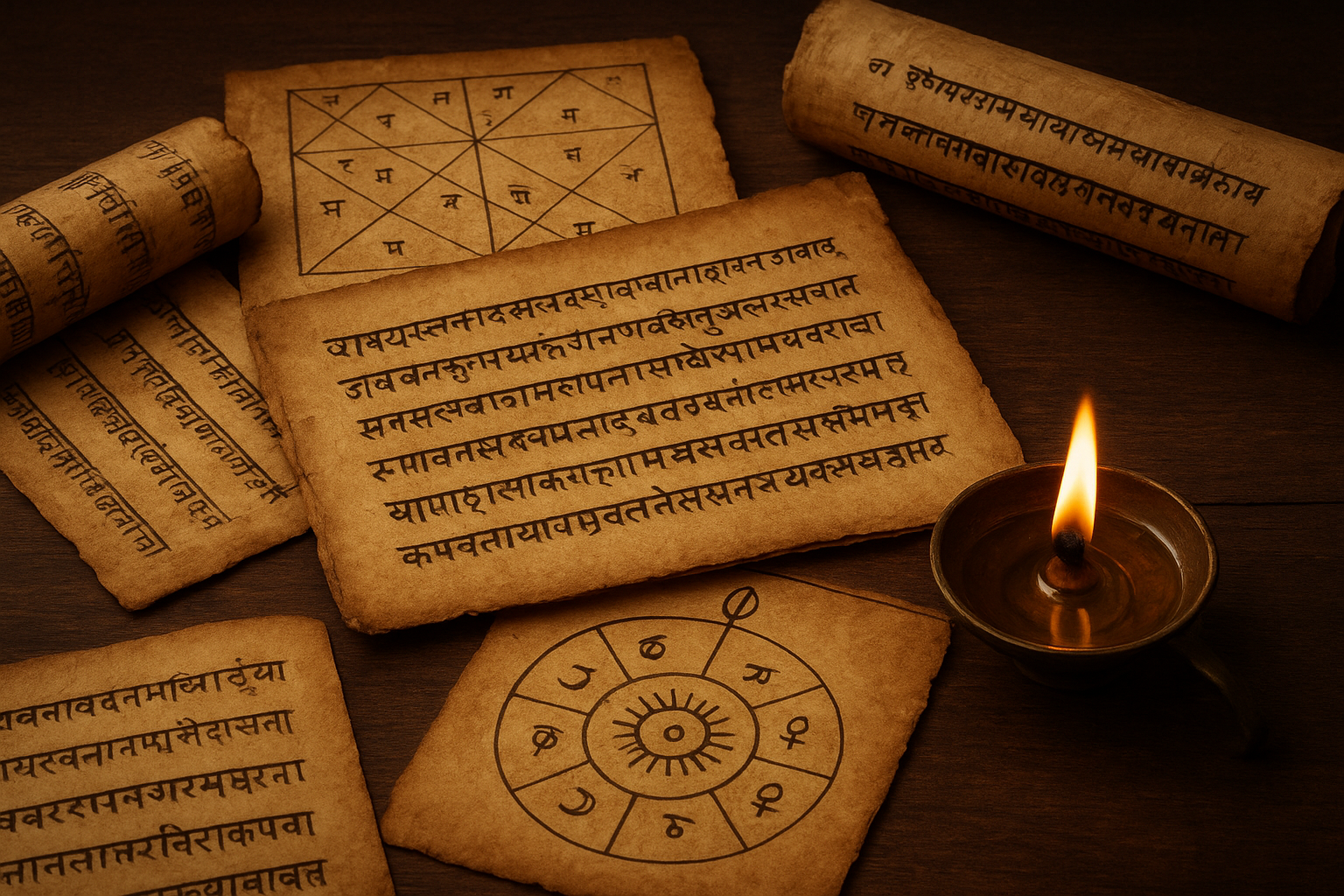
Ancient manuscripts of Jyotish Shastra — the roots of Vedic Astrology
🔯 Understanding the Natal Chart
The North Indian style natal chart (Janma Kundali) maps planetary positions at birth in a diamond-shaped diagram. Each house represents a domain of life, and the planetary placements reveal karma, dharma, and life’s unfolding path.

Natal chart — the foundation of horoscope analysis
🌠 The Path of Learning
Studying Vedic astrology requires patience, precision, and intuition. Learners progress through fundamentals such as chart interpretation, planetary aspects, yogas, and timing systems before mastering advanced predictive and spiritual applications.
“To understand the stars is to understand the Self.”