
Vedic Vastu Shastra
The Ancient Science of Space, Energy, and Harmony
Vastu Shastra is the traditional Indian system of architecture derived from the Vedas. It integrates design, geometry, astronomy, and spirituality to create environments that resonate with cosmic order. The word Vastu means “dwelling” and Shastra means “science,” making it the science of harmonious living spaces.
🏛️ Origins and Philosophy
Rooted in the Atharva Veda, Vastu connects the five great elements—Earth, Water, Fire, Air, and Space—with the orientation of structures on Earth. It teaches that correct spatial balance allows prāṇa (life force) to flow freely, bringing health, prosperity, and peace.
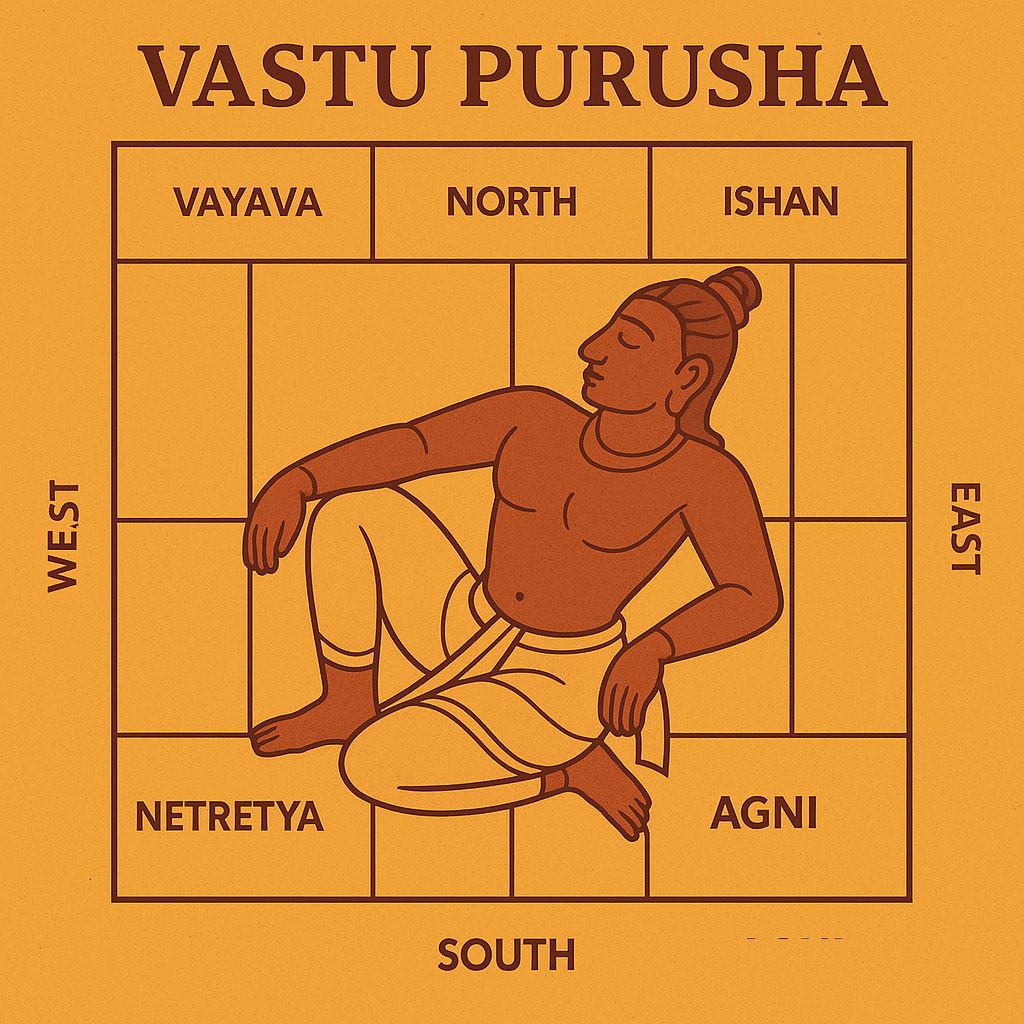
Vastu Purusha Mandala — the cosmic plan guiding spatial design
🌏 Core Principles
- Panchabhutas: The five elements must be balanced through proper placement of rooms and materials.
- Directions: Each of the eight cardinal directions is ruled by a deity and has specific energy attributes.
- Center (Brahmasthan): The heart of a building, left open or light-filled to allow divine energy to circulate.
- Orientation: Entrances, windows, and walls are aligned with sunrise and sunset for natural harmony.
- Geometry: The sacred square or Vastu Purusha Mandala forms the blueprint of ideal construction.
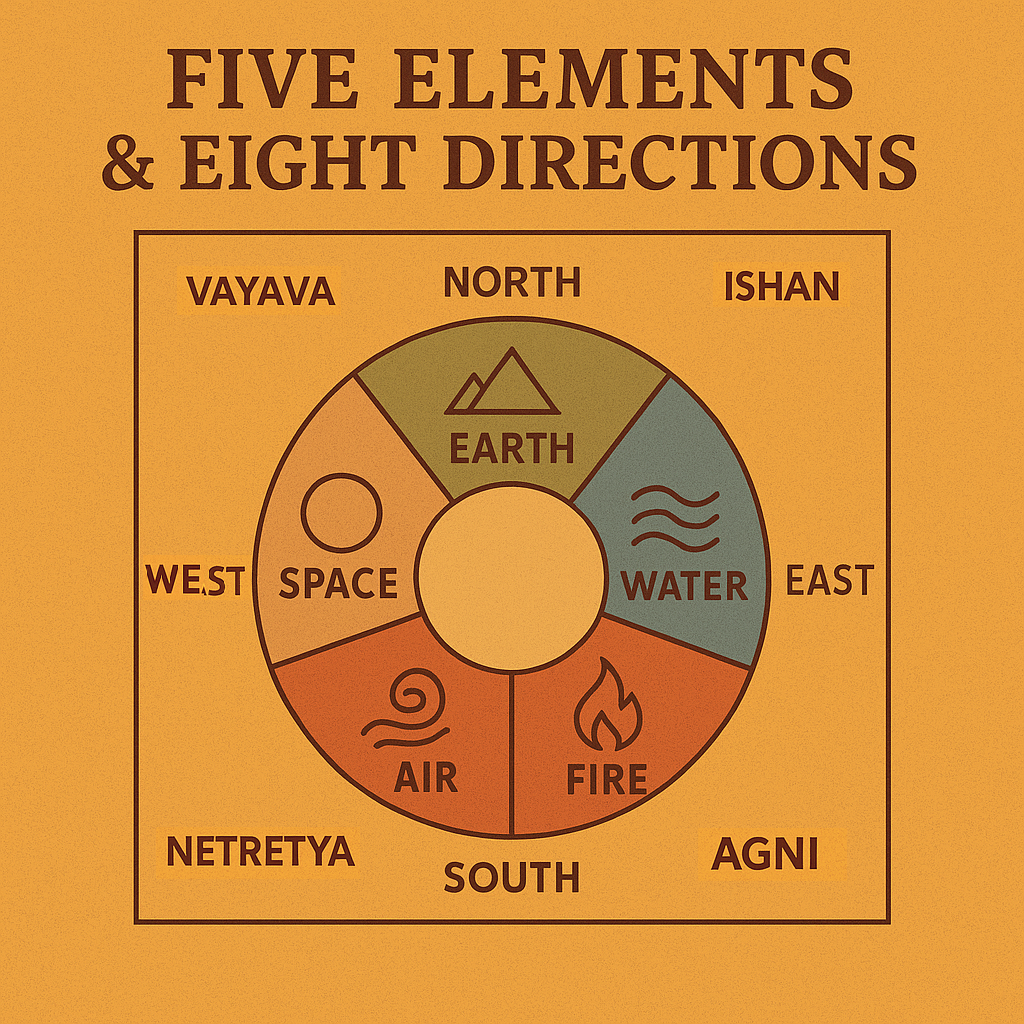
The five elements and eight directions create the energetic matrix of space
🏠 Application in Architecture
Vastu principles are applied to homes, temples, offices, and cities. The location of rooms—such as kitchen in the southeast (Agni corner) or water bodies in the northeast (Ishanya)—aligns daily life with cosmic rhythm. Even modern architects use Vastu to design sustainable, positive spaces.

Home layout aligned with directional and elemental balance
📐 The Sacred Geometry
Every Vastu layout begins with a geometric diagram dividing the plot into squares representing deities. The symmetry of these grids ensures equilibrium between material and spiritual dimensions, making the space itself a living mandala.
Sacred geometry harmonizes architecture with universal order
🌿 Modern Relevance
In contemporary times, Vastu principles complement environmental and psychological design. Aligning workspaces, entrances, and colors to energy flow enhances productivity, well-being, and serenity. The wisdom of Vastu continues to bridge science and spirituality in design.
Modern architecture inspired by ancient Vastu Shastra
✨ The Path of Learning
Students of Vastu learn to read site energies, create blueprints from mandalas, and harmonize built spaces with nature’s rhythm. Combining intuition with proportion and mathematics, the discipline leads to designs that nourish both body and spirit.
“When space breathes in balance, life unfolds in peace.”